
Forex Risk Management: How Traders Protect Trading Capital
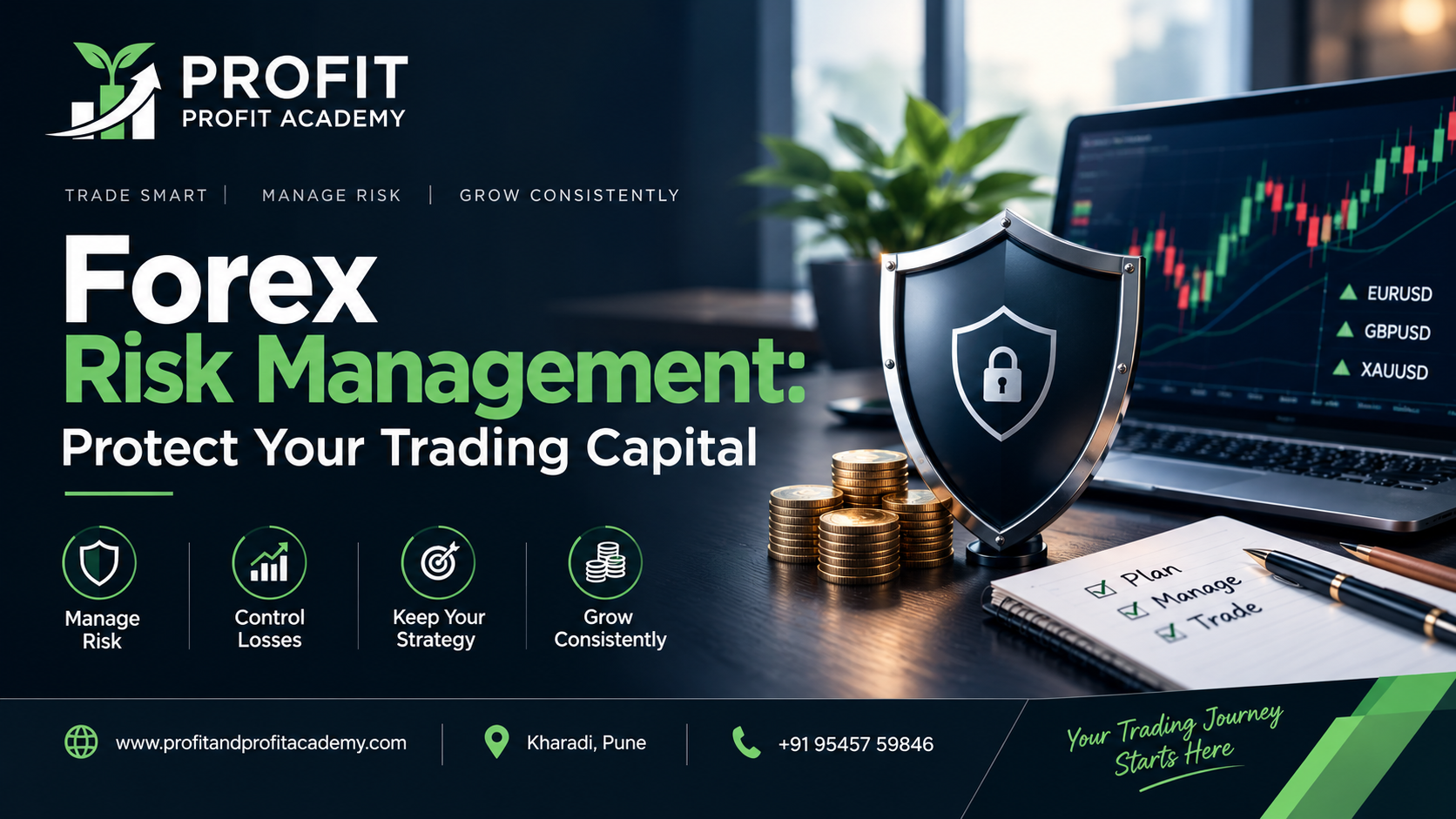
Forex Risk Management: How Traders Protect Trading Capital
Learn how position sizing, stop-loss orders, leverage control, and disciplined trading decisions can help you manage risk in the Forex market.
Forex trading involves buying one currency while selling another. Currency prices fluctuate because of interest rates, economic announcements, market sentiment, and global events. Although traders often focus on identifying profitable opportunities, understanding potential losses is equally important. Forex risk management for beginners starts with calculating how much capital could be lost before placing a trade, rather than making decisions after the market moves against a position.
A structured trading plan helps traders make decisions based on predefined rules instead of fear, excitement, or the desire to recover previous losses. No method can eliminate uncertainty or guarantee profits, but a consistent approach can help traders manage their exposure more carefully. Learning Forex risk management involves understanding position sizes, stop-loss placement, leverage, and the importance of following a trading plan even when market conditions become challenging.
Why Risk Management Matters in Forex Trading
The Forex market can experience rapid price movements, especially around economic announcements, central-bank decisions, and unexpected global events. A trade that initially appears reasonable may move sharply in the opposite direction. Forex risk management for beginners involves identifying these possibilities before entering the market and determining an acceptable level of risk for each trade.
Capital preservation does not mean avoiding every losing trade. Even a carefully researched trading decision can produce a loss because market movements are uncertain. Traders who establish clear risk limits can assess each opportunity using consistent criteria rather than changing their approach after every outcome. Reviewing previous trades also helps identify recurring mistakes and encourages more disciplined decision-making.
Position Sizing and Stop-Loss Orders
Position sizing determines the volume of a trade according to the account balance, planned risk, and distance to the stop-loss level. Forex position sizing helps traders calculate an appropriate trade volume rather than choosing a position simply because a broker permits it. A stop-loss order is designed to close a position when a specified price is reached, subject to execution conditions. Traders commonly place it at a level where their original trade idea would no longer be valid, then calculate the position size accordingly. However, a stop-loss does not guarantee the exact exit price during gaps or volatile conditions. To strengthen your chart-reading knowledge, explore the Technical Analysis Course.
Leverage, Margin, and Trading Discipline
Leverage allows traders to control a larger market position relative to the funds committed. It can magnify both gains and losses, meaning a relatively small price movement may significantly affect account equity. Forex risk management for beginners requires understanding the difference between the margin needed to open a position and the potential loss if the market moves unfavourably.
For a better understanding of leveraged trading and its potential risks, read this Investor.gov guide to Forex trading, which explains how leverage can magnify losses as well as gains. Traders should not select a position merely because a platform offers high leverage. Instead, they should consider volatility, transaction costs, total market exposure, and their ability to tolerate losses. Maintaining discipline also means avoiding revenge trading, taking breaks after stressful sessions, and resisting the temptation to increase trade sizes to recover previous losses. A clear plan helps traders remain focused on their process rather than individual outcomes.
Build a Practical Risk-Management Plan
A written trading plan should define entry conditions, the point at which the trade idea becomes invalid, the intended exit, and the maximum acceptable exposure. Forex position sizing should be calculated before placing an order, using the account balance and stop-loss distance as key inputs. A trading journal can record the setup, position size, exit, outcome, and whether the original plan was followed.
Review your journal regularly to identify patterns such as oversized positions, premature exits, or repeated trades during unfamiliar market conditions. Beginners can practice their methods in a demo account before considering real-money trading. You can explore Forex and trading courses to develop your market knowledge and study the Forex Market Course to understand currency-market fundamentals.
Common Risk-Management Mistakes to Avoid
One common mistake is increasing position sizes after a losing trade to recover money quickly. This can expose more capital to further losses. Traders should also avoid moving stop-loss levels farther away without a valid reason, trading without a predefined exit plan, or using excessive leverage. Forex position sizing should reflect the planned risk rather than emotions or confidence in a particular trade.
Another important consideration is market volatility. Major economic announcements can cause sudden price movements and wider spreads, potentially affecting execution. Maintaining a trading journal, reviewing past decisions, and following consistent risk limits can help traders recognise mistakes and improve their process over time. Risk management cannot guarantee profitable results; its purpose is to help control exposure and support informed trading decisions.
How to Protect Trading Capital Over Time
Understanding how to protect trading capital in Forex requires patience, preparation, and regular evaluation. Traders should monitor their overall exposure instead of assessing each position in isolation, particularly when several trades involve currencies that may react similarly to the same economic event. They should also account for trading costs and avoid risking money they cannot afford to lose. Consistent learning is equally important. Market conditions change, and a strategy that performs well in one environment may struggle in another. Reviewing performance, testing changes carefully, and maintaining realistic expectations can help traders develop a more structured approach. Forex risk management for beginners should focus on repeatable decisions, controlled exposure, and continuous improvement rather than chasing quick profits.
Conclusion
Successful trading education begins with understanding both opportunities and risks. Forex risk management for beginners means planning potential losses, calculating appropriate position sizes, understanding leverage, and reviewing decisions regularly. A disciplined process cannot remove market uncertainty, but it can help traders make more informed decisions and avoid taking risks they do not fully understand.
About Profit & Profit Academy
Phone: -+91 95457 59846
Email: -pnpacademy80@gmail.com
Website:- https://profitandprofitacademy.com/
Address: 1014–1015, Gera Imperium Alpha, Rajaram Patil Nagar,
Vitthal Nagar, Kharadi, Pune – 411014.
FAQ:-
1. What Does Forex Risk Management for Beginners Involve?
It involves planning potential losses, calculating position sizes, using stop-loss orders, and controlling leverage before entering trades.
2. How Much Should A Beginner Risk Per Trade?
Some traders use a 1% risk limit as an educational guideline. The appropriate amount depends on individual circumstances, experience, and risk tolerance.
3. Why Is A Stop-Loss Important?
A stop-loss helps define an exit point when a trade moves against expectations, although the final execution price is not guaranteed.
4. How Does Leverage Affect Trading?
Leverage increases market exposure and can magnify both profits and losses. Traders should understand margin requirements before opening positions.
5. How Can Traders Improve Their Risk Management?
They can maintain a trading journal, practise in a demo account, review past trades, and follow a consistent risk-management plan.
Stay Connected with Profit & Profit Academy
Stay connected for Forex educational resources, technical analysis updates, and market learning content.
Telegram Channel: https://t.me/+jl-CySgAazVjOTY1
WhatsApp Channel: https://whatsapp.com/channel/0029VbDYNHfAO7RChLBbGV2f2